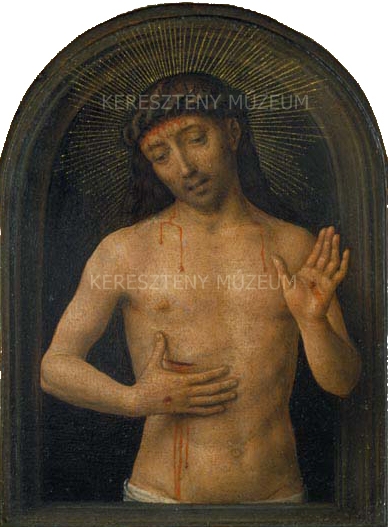
Man of Sorrows
after 1490
tempera and oil on oak (?)
12.9 x 9.2 cm
Inv. 55.345
The German-born Memling was an outstanding painter of the rich merchant town of Bruges. This work, smaller than a postcard, was acquired in Rome by János Simor in 1878 – it is known that Memling’s art was highly appreciated also in Italy. The picture must have been an object for personal devotion, perhaps a part of a portable altarpiece or of a portrait diptych. The brilliantly executed, illusionistic placement of the human figure in front of a painted architectural frame derives from the art of Jan van Eyck. For the modern viewer, the representation of the tortured, dead Christ as a living man can seem unusual and striking. Christ here presents his wounds the beholder of the picture, inviting him or her for sympathy and compassion. The Vir Dolorum, or the Man of Sorrows (Isaiah 53, 3), was a widespread iconographical type in the late Middle Ages. It originated in Byzantine art and was used in European art till the Baroque times.
Zs.U.