Panels from an altarpiece dedicated to the Three Magi
1470-1480
Pine, tempera
58.5 x 30 cm each
The Adoration of the Magi; detail from an altarpiece wing
Inv. 55.38
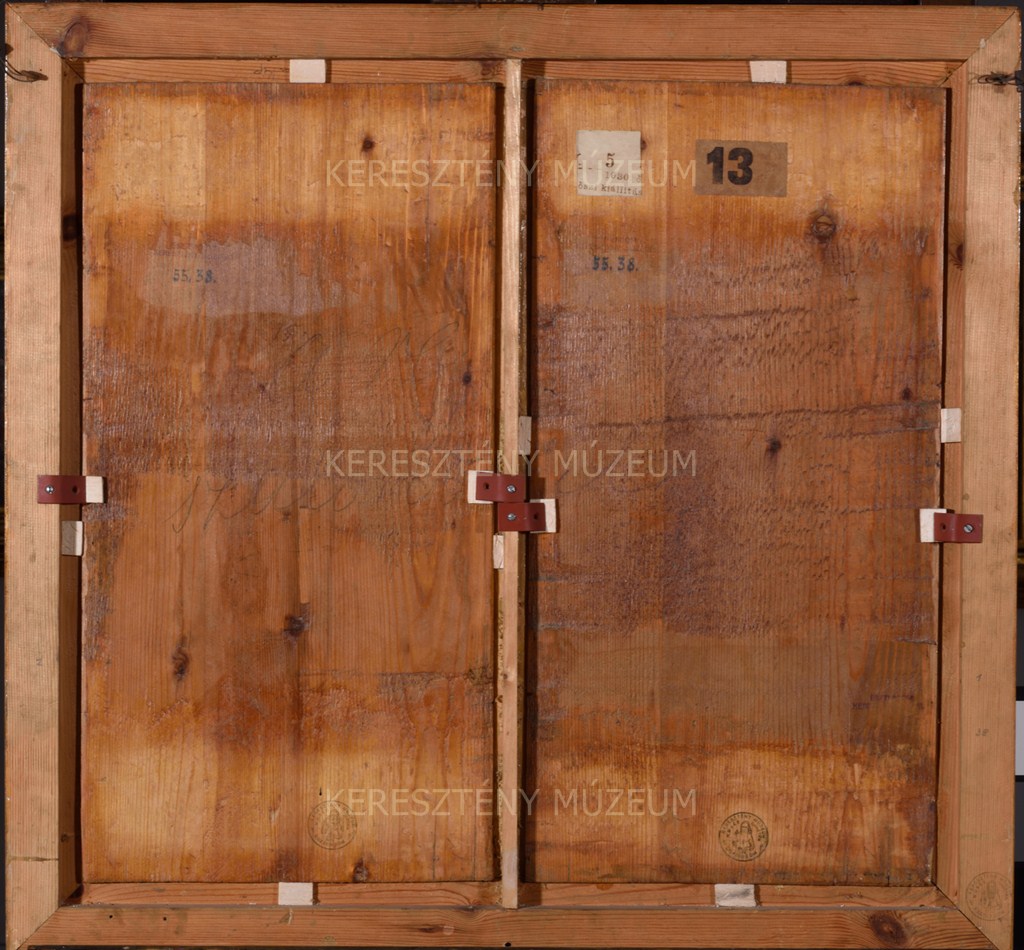
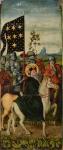
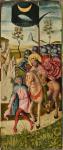
The composition showing the Adoration of the Magi was presented in two panels enclosed together in one frame. Along with the panels presenting the Procession of the Magi (55.39 and 55.40), the works were originally part of the same altarpiece dedicated, perhaps, to the Three Magi. The origins and the original place of usage of the winged altarpiece, however, is unknown. The division of the composition into two parts may be explained by the unusually narrow and (originally) long format. The dimensions of the panels comprising the Procession of the Three Magi and corresponding information in earlier professional literature suggest that the works were trimmed length-wise by about 15 cm. The trimming may explain why the elements in the background landscape do not continue immediately in the picture on the right, as was customary in the period.
On the left, Mary is seated on a stone throne beneath a thatched roof. The Child in her lap is receiving the gift from the oldest magi, who is kneeling before them, wearing a simple, long, red tunic adorned with a gold brocade collar and tight red stockings. He has placed his textile-lined crown beside him on the ground. In the background on the left, a partially collapsed stone wall and a detail of a tower with a pair of windows can be seen, while on the right is a landscape scene. In the lower left corner of the picture, a goldfinch appears as a symbol of the Passion.
The two younger magi appear in the panel on the right. One is carrying a golden ciborium in his right hand. He is wearing a green shirt and blue-red cloak over red stockings. The cloak falls strangely over his right shoulder, with the red lining here appearing as the outer colouring of the cloak. Behind him, the Moorish magi carries an antler chalice in his left hand, while his right hand is raised in warning. He is dressed in tight red stockings with a short white overcoat with green trim over a loose-sleeved shirt. He has a scarf underneath his crown. In the background is a landscape with a crumbling stone wall. In the lower left corner is a siskin, the companion to the goldfinch and also a symbol of the Passion. The symbolic spring flowers around the birds (referring to Mary and the Birth of Christ) were partially lost when the panels were trimmed. The style of the pictures makes it likely that the painter, although active in the mining region, was familiar with Austrian painting of that time and was well aware of the latest prints, borrowing from them freely rather than slavishly copying them.
Several elements of the composition recall an engraving on the same subject matter by Martin Schongauer; thus it seems certain that the painter had direct knowledge of the Schongauer print, dated to the first half of the 1470s.
Although the professional literature to this day has considered our master a (distant) follower of the so-called Master of Jánosrét, active in Körmöcbánya, the connection between the two artists’ styles is tenuous. It is more probable that they merely worked in the same geographic area.
Provenance:
Ipolyi Collection. ‘156. Composition presented on a two-part panel: the three holy kings. Oil painting on wood panel in the manner of the early 16th c.’ Lakatos-Balla, 277.
On the left, Mary is seated on a stone throne beneath a thatched roof. The Child in her lap is receiving the gift from the oldest magi, who is kneeling before them, wearing a simple, long, red tunic adorned with a gold brocade collar and tight red stockings. He has placed his textile-lined crown beside him on the ground. In the background on the left, a partially collapsed stone wall and a detail of a tower with a pair of windows can be seen, while on the right is a landscape scene. In the lower left corner of the picture, a goldfinch appears as a symbol of the Passion.
The two younger magi appear in the panel on the right. One is carrying a golden ciborium in his right hand. He is wearing a green shirt and blue-red cloak over red stockings. The cloak falls strangely over his right shoulder, with the red lining here appearing as the outer colouring of the cloak. Behind him, the Moorish magi carries an antler chalice in his left hand, while his right hand is raised in warning. He is dressed in tight red stockings with a short white overcoat with green trim over a loose-sleeved shirt. He has a scarf underneath his crown. In the background is a landscape with a crumbling stone wall. In the lower left corner is a siskin, the companion to the goldfinch and also a symbol of the Passion. The symbolic spring flowers around the birds (referring to Mary and the Birth of Christ) were partially lost when the panels were trimmed. The style of the pictures makes it likely that the painter, although active in the mining region, was familiar with Austrian painting of that time and was well aware of the latest prints, borrowing from them freely rather than slavishly copying them.
Several elements of the composition recall an engraving on the same subject matter by Martin Schongauer; thus it seems certain that the painter had direct knowledge of the Schongauer print, dated to the first half of the 1470s.
Although the professional literature to this day has considered our master a (distant) follower of the so-called Master of Jánosrét, active in Körmöcbánya, the connection between the two artists’ styles is tenuous. It is more probable that they merely worked in the same geographic area.
Provenance:
Ipolyi Collection. ‘156. Composition presented on a two-part panel: the three holy kings. Oil painting on wood panel in the manner of the early 16th c.’ Lakatos-Balla, 277.