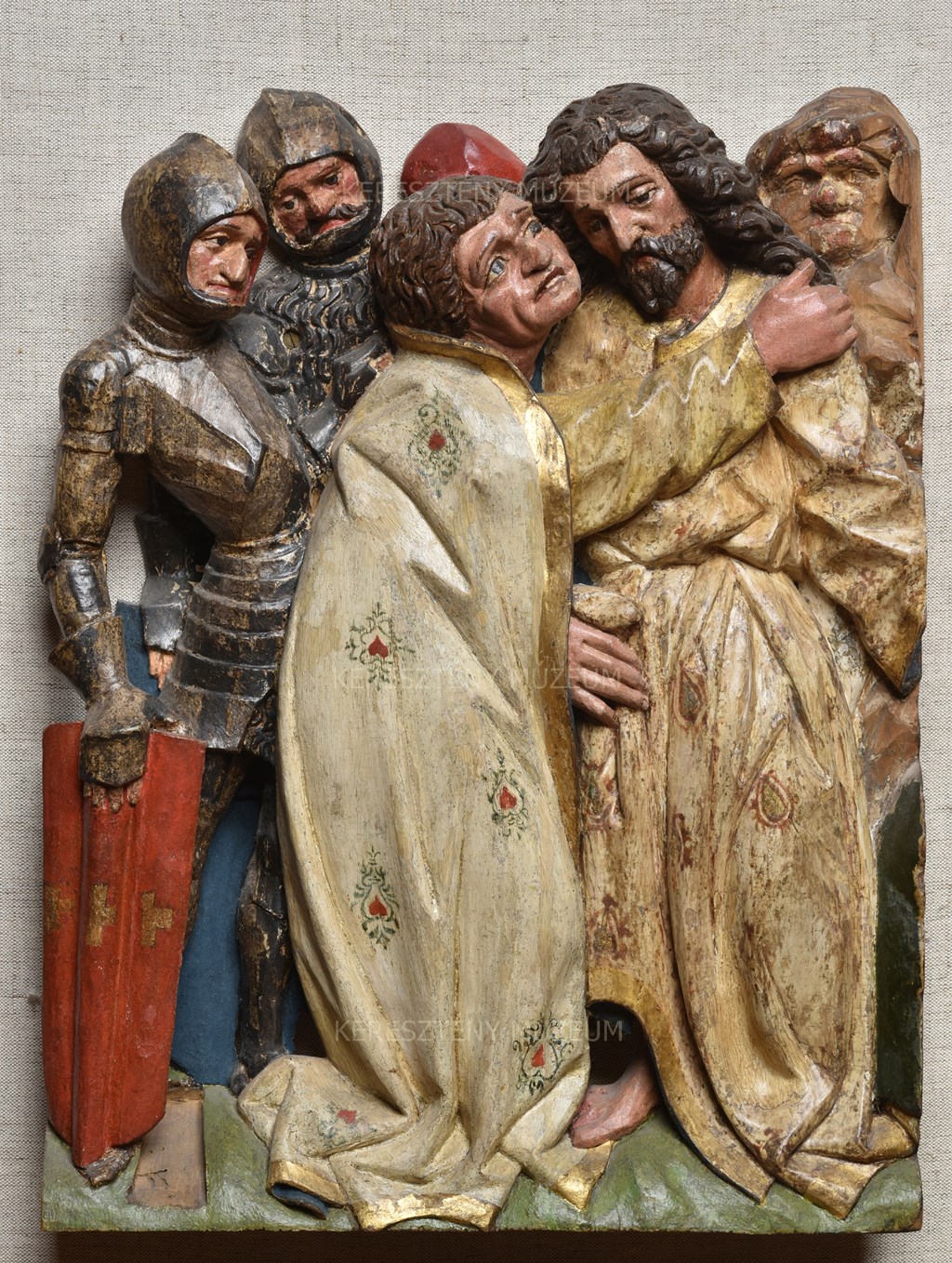
Three reliefs from the movable wings of a winged altarpiece
c. 1450
The Kiss of Judas
Inv. 56.834
Wood, painted, silver gilt, traces of press brocade
40 x 30 x 7 cm
The reliefs showing Christ on the Mount of Olives, the Kiss of Judas (56.834) and Christ Carrying the Cross (56.835) certainly belonged to the same altarpiece. The three scenes from the Passion most likely adorned the feast-day side of the retable. Perhaps a series of reliefs appeared in two registers on the movable wing, separated from one another by some kind of architectonic structure.
Provenance:
Ipolyi Collection.'157 és 159. Két összeillő fadombormű a XVII. sz. elejéről. Krisztus az Olajfák hegyén és a keresztvitel. Gyarlók. Újonnan átfestve.'/‘157 and 159. Two wood reliefs that fit together, from the beginning of the 17th century. Christ on the Mount of Olives and Carrying the Cross. Weak. Newly repainted.’ (Lakatos-Balla-2012, 278)
Restoration:
László Bíró, 1983-84
Bibliography:
Genthon-1948, 148. – E. H. Gombrich: A bécsi oltár és az Esztergomi Múzeum fareliefjeinek történeti helyzete. In: Magyar Művészet 11 (1935), 223-228. – Lakatos-Balla-2012, 276.
40 x 30 x 7 cm
The reliefs showing Christ on the Mount of Olives, the Kiss of Judas (56.834) and Christ Carrying the Cross (56.835) certainly belonged to the same altarpiece. The three scenes from the Passion most likely adorned the feast-day side of the retable. Perhaps a series of reliefs appeared in two registers on the movable wing, separated from one another by some kind of architectonic structure.
Provenance:
Ipolyi Collection.'157 és 159. Két összeillő fadombormű a XVII. sz. elejéről. Krisztus az Olajfák hegyén és a keresztvitel. Gyarlók. Újonnan átfestve.'/‘157 and 159. Two wood reliefs that fit together, from the beginning of the 17th century. Christ on the Mount of Olives and Carrying the Cross. Weak. Newly repainted.’ (Lakatos-Balla-2012, 278)
Restoration:
László Bíró, 1983-84
Bibliography:
Genthon-1948, 148. – E. H. Gombrich: A bécsi oltár és az Esztergomi Múzeum fareliefjeinek történeti helyzete. In: Magyar Művészet 11 (1935), 223-228. – Lakatos-Balla-2012, 276.