Panel paintings from a winged altarpiece from Csegöld
1494 (?)
Wood, tempera, gilt, traces of pressed brocade
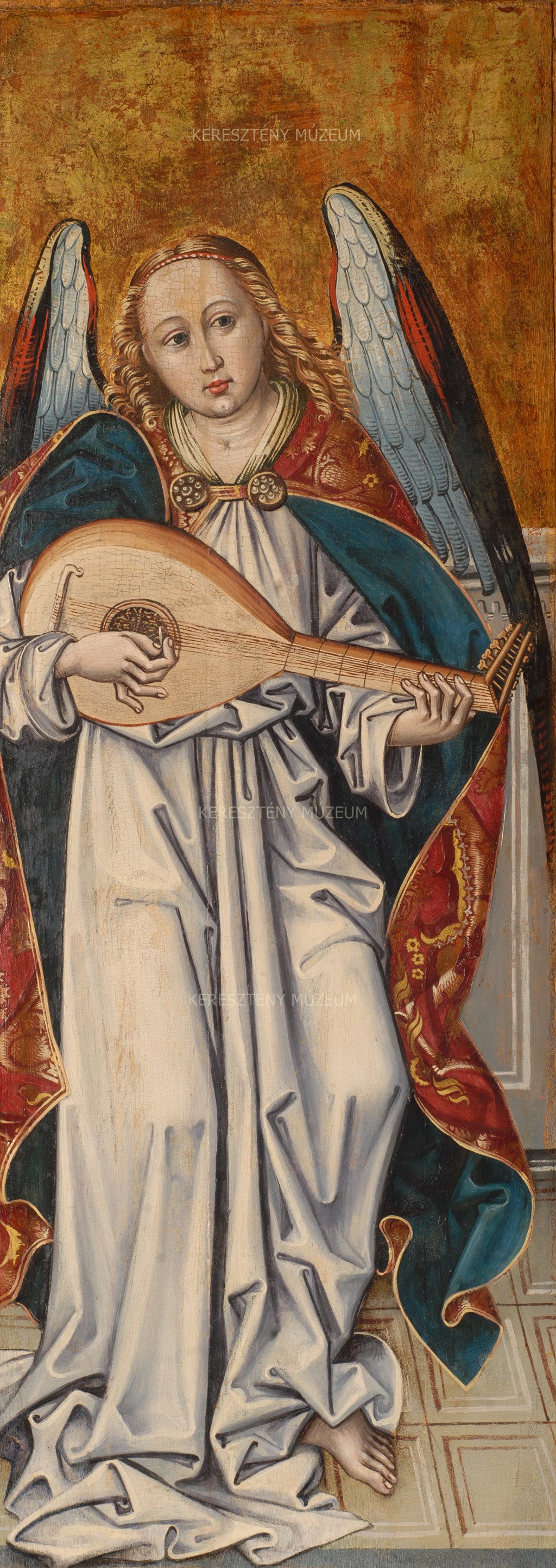
Angel paling a lyre; right fixed shrine panel of a winged altarpiece
Inv. 55.63
100 x 37 cm (painted surface) (two panels placed vertically in one frame: 216 x 46 cm)
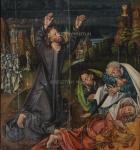
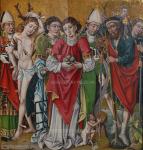
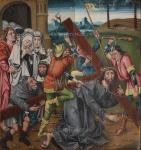
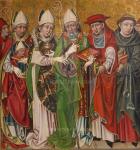
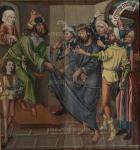
The four narrow, tall panel paintings showing angels playing music (55.61, 55.62.55.63.55.64) belonged to the same altarpiece, perhaps that dedicated to All Saints, as the three paintings depicting male saints (55.65, 55.66, 55.67). The angel panels flanked the corpus, the central image of the shrine, while the paintings of the male saints adorned the inner sides of the movable wings. The outer, workday sides of the movable wings displayed scenes of the Crucifixion. The fourth wing panel, now lost, showed female saints (Catherine, Barbara, Agnes, Elizabeth, Helena, Julianna and Ursula), with a Crucifixion scene on its reverse, according to the notes made in situ by Flóris Rómer.
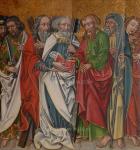
In the literature, the monogram presumed to belong to the painter known as master B.E. was described as appearing at the foot of Bartholomew or John in the panel depicting apostles, but today is not discernible. Traces of the monogram were possibly lost during restoration. Szilveszter Terdik has suggested the literature contains a misreading of the monogram: according to Flóris Rómer’s notes, the panel depicting the apostles bore the inscription REN 1494. Perhaps later, these letters were interpreted as BE. In the Passion scenes on the reverse of the movable wings, the remains of earlier overpaintings of the background and certain details can be seen.
Provenance:
Rómer saw the panels in the house of the Vécsei family, on the main square of Szatmárnémeti, along with other paintings in 1864. In 1922, the priest István Pataky discovered the paintings in the attic of the Greek Catholic parish of Csegöld. According to his information the paintings arrived in the parish c. 1880. (Szilveszter Terdik, however, considers it possible that the works had been safeguarded there during the First World War.) The Museum of Applied Arts financed the transport, with the assistance of Elek Petrovics, to Budapest with the aim of selling them. In the end, Tibor Gerevich arranged for the National Museum to acquire them. With the help of the Religion Fund and Gyula Forster, János Csernoch acquired the panels for the Christian Museum along with two Passion scenes by the Master of Liechtenstein (54.17-18) and a Visitation image (54.16), also discovered in Csegöld.
Restoration:
Dezső Varga ( side shrine panels)
Bibliography
Gerevich 1924, 24. – Lepold-Homor-1924, 96. – Gerevich Tibor: Von der älteren ungarischen Kunst. In: Ungarische Jahrbücher 5 (1925), 57. – Divald Kornél: Magyarország művészeti emlékei, Budapest, 1927, 135. – Fenyő-Genthon-1928, 91. – Gerevich Tibor: L’arte antica ungherese, Róma, 1929, 19. – Gerevich-1928, 208-210, 212. – Péter András: Magyar művészet. Magyarország Vereckétől napjainkig, Budapest, 1929, 41-42. – Péter András: A magyar művészet története, 1. kötet, Budapest, 1930, 118. – Hoffmann Edith: Über Altäre aus Ungarn im 15. und 16. Jahrhundert. In: Műgyűjtő 5 (1931), 165. – Rónay Mária: Die Schätze des Christlichen Museums in Esztergom. In: Műgyűjtő 5 (1931), 3. – Genthon-1932, 59-60. – Horváth Henrik: H. Heinrich Faust és a bécsi gobelinek. In: Tanulmányok Budapest múltjából 1. kötet, Budapest, 1932, 68. – Szőnyi Ottó: Régi magyar templomok, Budapest, 1933, 28. – Csánky Miklós: A lőcsei Vir dolorum oltár. In: Magyar Művészet 13 (1937), 54, 58, 61. – Csánky Dénes: Tanulmányok a szepességi táblaképfestészet XVI. századi történetéhez. In: Magyar Művészet 13 (1937), 347. – Rados Jenő: Magyar oltárok, Budapest, 1938, 51. – Horváth Henrik: Il rinascimento in Ungheria, Roma, 1939, 96. – Horváth Henrik: König Matthäus und die Kunst. In: Ungarische Jahrbücher 20 (1940), 222. – Petrovics Elek: A régi magyar művészet és a Szépművészeti Múzeum. In: Budapesti Szemle 256 (1940), 222. – Pásztor Lajos: A magyarság vallásos élete a Jagellók korában, Budapest, 1940, 153. – Paár Zoltán: A szenvedő Krisztus a művészetben. In: Szépművészet 4 (1943), 78. – Genthon-1948, 38-39. – Radocsay Dénes: Un tableau médiéval hongrois. In: Bulletin Musée Hongrois des Beaux-Arts 3 (1949), 12. – Radocsay-1955a, 12. – Czobor Ágnes: Az esztergomi Keresztény Múzeum kiállításának vezetője. Budapest 1955, 15. Radocsay-1955b, 107-108, 285-286. – Boskovits-Mojzer-Mucsi-1964, 133-134. – Dávid Ferenc: A csegöldi mester, 1964. Szakdolgozat. ELTE. – Mucsi-1973, 10. – Mucsi-1975, 15-16. – Cséfalvay-1993, 179 (Török Gy.). – Kölnei Lívia: A tizennégy segítőszent kultusza a középkori Magyarországon. In: Orvostörténeti Közlemények 42-43 (1997-1998), 118, 127-128. – Kölnei Lívia - Balázs Edit: In omni ora. Minden órában, a tizennégy segítőszent kultusza Magyarországon. Budapest (év nélkül), 85-87. – Terdik Szilveszter: Csegöld középkori temploma és a csegöldi táblaképek, in: Szabolcs-Szatmár-Beregi Szemle 2007/2, 183-218.
The four narrow, tall panel paintings showing angels playing music (55.61, 55.62.55.63.55.64) belonged to the same altarpiece, perhaps that dedicated to All Saints, as the three paintings depicting male saints (55.65, 55.66, 55.67). The angel panels flanked the corpus, the central image of the shrine, while the paintings of the male saints adorned the inner sides of the movable wings. The outer, workday sides of the movable wings displayed scenes of the Crucifixion. The fourth wing panel, now lost, showed female saints (Catherine, Barbara, Agnes, Elizabeth, Helena, Julianna and Ursula), with a Crucifixion scene on its reverse, according to the notes made in situ by Flóris Rómer.
In the literature, the monogram presumed to belong to the painter known as master B.E. was described as appearing at the foot of Bartholomew or John in the panel depicting apostles, but today is not discernible. Traces of the monogram were possibly lost during restoration. Szilveszter Terdik has suggested the literature contains a misreading of the monogram: according to Flóris Rómer’s notes, the panel depicting the apostles bore the inscription REN 1494. Perhaps later, these letters were interpreted as BE. In the Passion scenes on the reverse of the movable wings, the remains of earlier overpaintings of the background and certain details can be seen.
Provenance:
Rómer saw the panels in the house of the Vécsei family, on the main square of Szatmárnémeti, along with other paintings in 1864. In 1922, the priest István Pataky discovered the paintings in the attic of the Greek Catholic parish of Csegöld. According to his information the paintings arrived in the parish c. 1880. (Szilveszter Terdik, however, considers it possible that the works had been safeguarded there during the First World War.) The Museum of Applied Arts financed the transport, with the assistance of Elek Petrovics, to Budapest with the aim of selling them. In the end, Tibor Gerevich arranged for the National Museum to acquire them. With the help of the Religion Fund and Gyula Forster, János Csernoch acquired the panels for the Christian Museum along with two Passion scenes by the Master of Liechtenstein (54.17-18) and a Visitation image (54.16), also discovered in Csegöld.
Restoration:
Dezső Varga ( side shrine panels)
Bibliography
Gerevich 1924, 24. – Lepold-Homor-1924, 96. – Gerevich Tibor: Von der älteren ungarischen Kunst. In: Ungarische Jahrbücher 5 (1925), 57. – Divald Kornél: Magyarország művészeti emlékei, Budapest, 1927, 135. – Fenyő-Genthon-1928, 91. – Gerevich Tibor: L’arte antica ungherese, Róma, 1929, 19. – Gerevich-1928, 208-210, 212. – Péter András: Magyar művészet. Magyarország Vereckétől napjainkig, Budapest, 1929, 41-42. – Péter András: A magyar művészet története, 1. kötet, Budapest, 1930, 118. – Hoffmann Edith: Über Altäre aus Ungarn im 15. und 16. Jahrhundert. In: Műgyűjtő 5 (1931), 165. – Rónay Mária: Die Schätze des Christlichen Museums in Esztergom. In: Műgyűjtő 5 (1931), 3. – Genthon-1932, 59-60. – Horváth Henrik: H. Heinrich Faust és a bécsi gobelinek. In: Tanulmányok Budapest múltjából 1. kötet, Budapest, 1932, 68. – Szőnyi Ottó: Régi magyar templomok, Budapest, 1933, 28. – Csánky Miklós: A lőcsei Vir dolorum oltár. In: Magyar Művészet 13 (1937), 54, 58, 61. – Csánky Dénes: Tanulmányok a szepességi táblaképfestészet XVI. századi történetéhez. In: Magyar Művészet 13 (1937), 347. – Rados Jenő: Magyar oltárok, Budapest, 1938, 51. – Horváth Henrik: Il rinascimento in Ungheria, Roma, 1939, 96. – Horváth Henrik: König Matthäus und die Kunst. In: Ungarische Jahrbücher 20 (1940), 222. – Petrovics Elek: A régi magyar művészet és a Szépművészeti Múzeum. In: Budapesti Szemle 256 (1940), 222. – Pásztor Lajos: A magyarság vallásos élete a Jagellók korában, Budapest, 1940, 153. – Paár Zoltán: A szenvedő Krisztus a művészetben. In: Szépművészet 4 (1943), 78. – Genthon-1948, 38-39. – Radocsay Dénes: Un tableau médiéval hongrois. In: Bulletin Musée Hongrois des Beaux-Arts 3 (1949), 12. – Radocsay-1955a, 12. – Czobor Ágnes: Az esztergomi Keresztény Múzeum kiállításának vezetője. Budapest 1955, 15. Radocsay-1955b, 107-108, 285-286. – Boskovits-Mojzer-Mucsi-1964, 133-134. – Dávid Ferenc: A csegöldi mester, 1964. Szakdolgozat. ELTE. – Mucsi-1973, 10. – Mucsi-1975, 15-16. – Cséfalvay-1993, 179 (Török Gy.). – Kölnei Lívia: A tizennégy segítőszent kultusza a középkori Magyarországon. In: Orvostörténeti Közlemények 42-43 (1997-1998), 118, 127-128. – Kölnei Lívia - Balázs Edit: In omni ora. Minden órában, a tizennégy segítőszent kultusza Magyarországon. Budapest (év nélkül), 85-87. – Terdik Szilveszter: Csegöld középkori temploma és a csegöldi táblaképek, in: Szabolcs-Szatmár-Beregi Szemle 2007/2, 183-218.