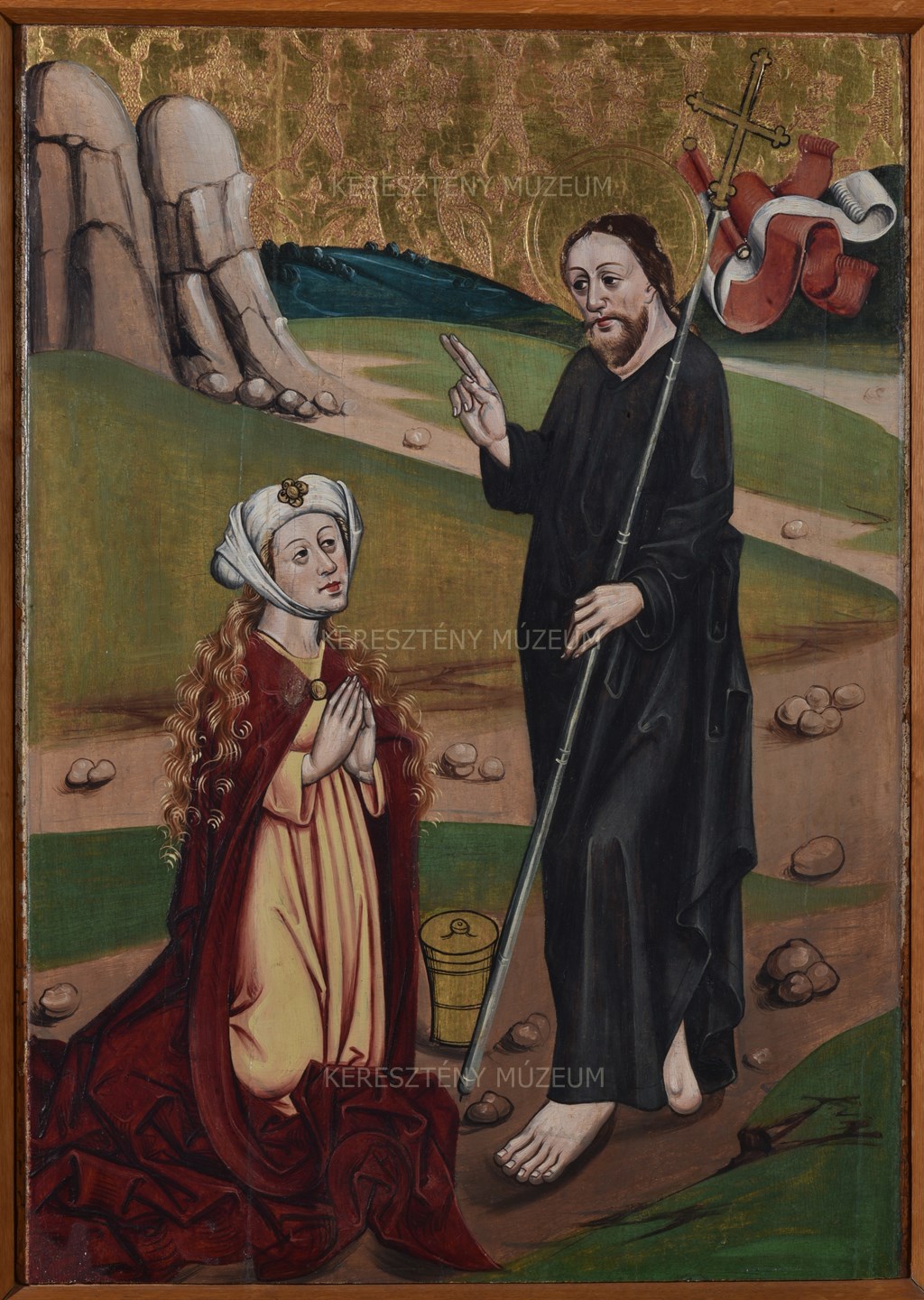
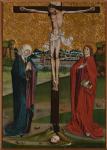
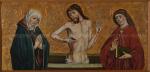
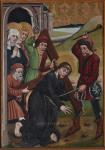
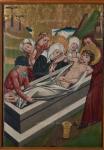
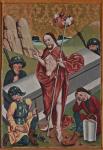
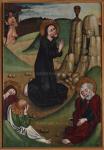
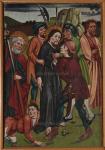
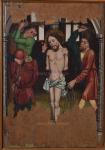
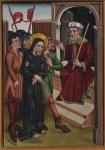
Calvary Altar from Garamszentbenedek
c. 1470
Pine, tempera
Noli me tangere (inner side of the right wing panel)
Inv. 55.29
77.5 x 55 cm
Prior to 1875, the altarpiece was disassembled and brought to the Christian Museum. It seems that the double-sided wing panels were separated at an earlier time and in 1875, when the Picture Gallery opened, the panels received new frames. The present structure of the altarpiece was built during or after the restoration work done from 1972 to 1975. Recent research determined that the Calvary altarpiece of Garamszentbenedek was the product of the workshop of the so-called Master of Jánosrét. Earlier it had been identified, at least parts of it (the central image and the predella) as the work of the master himself. It has also become clear that the master should be viewed as a contractor who directed the operations of the workshop and contributed primarily as a painter and occasionally as a sculptor, with the other masters hired as needed. The seat of the workshop was most likely in Körmöcbánya (perhaps Garamszentbenedek). The rather large number and variety of works from this area call for a re-evaluation of our earlier image of the activities and oeuvre of the so-called Master of Jánosrét.
Provenance.
Brought to Esztergom from the Benedictine Abbey of Garamszentbenedek with the assistance of Prince Primate János Simor.
Restoration:
Márta Blaski, 1975. During restoration work in the 1960s and 70s, earlier overpaintings were removed from the surface of each panel. The panels had also been cradled after they were sawed apart. During the later restoration, the cradling was removed, the panels were thinned, and the paintings were transferred to new panels, new supports.
Bibliography
Maszlaghy-1878, 32. – Magyar Sion-1885, 524. – Maszlaghy-1891, 31-32. – Gerevich-1916, 553. – Gerevich Tibor: Kolozsvári Tamás, az első magyar képtáblafestő. Az O.M. Régészeti Társulat Évkönyve. 2 (1923/26), 32. – Gerevich 1924, 12-13, 23.– Genthon István: Magyar művészek Ausztriában a Mohácsi vészig. Bp. 1927, 57-58. – Gerevich-1928, 210. – Fenyő-Genthon-1928: 1928, 75. – Péter András: A magyar művészet története. I. Bp. 1930, 1916. – Genthon-1932, 54-56, pic 38. – Péter András: Genthon István - A régi magyar festőművészet. Könyvismertetés. In: Magyar Művészet 8(1932) 320. – Horváth Henrik: H. Heinrich Faust és a bécsi gobelinek. Tanulmányok Budapest Múltjából, I. Budapest 1932, 68. – Csánky Miklós: A lőcsei Vir dolorum oltár. In: Magyar Művészet 13 (1937) 58. – Rados Jenő: Magyar oltárok. Bp 1938, 36. – Lepold-Lippay-1938, 54. – Horváth E: Il rinascimento in Ungheria. Annuarii III Roma 1939, 102. – Genthon-1948, 26-28. – Radocsay-1955a, 11. – Czobor-1955, 5-6. (Pic. Nr.1.). – Radocsay-1955b, 103–109., 337–340. – Radocsay-1967. 73–75., 176–177. – A Magyar Nemzeti Galéria Régi Gyűjteményei (edit.: Mojzer Miklós), Budapest, 1984. 40–43., 53–55. – Török Gyöngyi: A jánosréti Szent Miklós-főoltár a Magyar Nemzeti Galériában, Budapest 1989. – Cidlinská, Libuše: Gotické Krídlové oltáre na Slovensku, Bratislava 1989. 58–59. – Kerny Terézia: Török Gyöngyi: A jánosréti Szent Miklós-főoltár a Magyar Nemzeti Galériában. Könyvismertetés. In: BUKSZ 2 (1990). 377–379. – Keller Anna: A Jánosréti mester és köre a művészettörténeti szakirodalomban. In: Ars Hungarica 18 (1990), 187–200. – Kerny Terézia: Kéziratos és rajzi dokumentumok a jánosréti templom berendezésének történetéhez. In: Ars Hungarica 20 (1992), 115–120. – Cséfalvay-1993. 176 (Török Gy.). – Urbach Zsuzsa: Oltártörténetek. In: Könyvvilág 35/1. (1990), 11. – Prokopp Mária: Török Gyöngyi - A Jánosréti Szent Miklós Főoltár a Magyar Nemzeti Galériában. In: Művészet 31/3(1990), 62-63. – Poszler Györgyi: A jánosréti mester. – Pannonhalma-2001, 631 (Takács Imre). – Pozsony-2003 (M. Sugar) 476, 478, 714.
Prior to 1875, the altarpiece was disassembled and brought to the Christian Museum. It seems that the double-sided wing panels were separated at an earlier time and in 1875, when the Picture Gallery opened, the panels received new frames. The present structure of the altarpiece was built during or after the restoration work done from 1972 to 1975. Recent research determined that the Calvary altarpiece of Garamszentbenedek was the product of the workshop of the so-called Master of Jánosrét. Earlier it had been identified, at least parts of it (the central image and the predella) as the work of the master himself. It has also become clear that the master should be viewed as a contractor who directed the operations of the workshop and contributed primarily as a painter and occasionally as a sculptor, with the other masters hired as needed. The seat of the workshop was most likely in Körmöcbánya (perhaps Garamszentbenedek). The rather large number and variety of works from this area call for a re-evaluation of our earlier image of the activities and oeuvre of the so-called Master of Jánosrét.
Provenance.
Brought to Esztergom from the Benedictine Abbey of Garamszentbenedek with the assistance of Prince Primate János Simor.
Restoration:
Márta Blaski, 1975. During restoration work in the 1960s and 70s, earlier overpaintings were removed from the surface of each panel. The panels had also been cradled after they were sawed apart. During the later restoration, the cradling was removed, the panels were thinned, and the paintings were transferred to new panels, new supports.
Bibliography
Maszlaghy-1878, 32. – Magyar Sion-1885, 524. – Maszlaghy-1891, 31-32. – Gerevich-1916, 553. – Gerevich Tibor: Kolozsvári Tamás, az első magyar képtáblafestő. Az O.M. Régészeti Társulat Évkönyve. 2 (1923/26), 32. – Gerevich 1924, 12-13, 23.– Genthon István: Magyar művészek Ausztriában a Mohácsi vészig. Bp. 1927, 57-58. – Gerevich-1928, 210. – Fenyő-Genthon-1928: 1928, 75. – Péter András: A magyar művészet története. I. Bp. 1930, 1916. – Genthon-1932, 54-56, pic 38. – Péter András: Genthon István - A régi magyar festőművészet. Könyvismertetés. In: Magyar Művészet 8(1932) 320. – Horváth Henrik: H. Heinrich Faust és a bécsi gobelinek. Tanulmányok Budapest Múltjából, I. Budapest 1932, 68. – Csánky Miklós: A lőcsei Vir dolorum oltár. In: Magyar Művészet 13 (1937) 58. – Rados Jenő: Magyar oltárok. Bp 1938, 36. – Lepold-Lippay-1938, 54. – Horváth E: Il rinascimento in Ungheria. Annuarii III Roma 1939, 102. – Genthon-1948, 26-28. – Radocsay-1955a, 11. – Czobor-1955, 5-6. (Pic. Nr.1.). – Radocsay-1955b, 103–109., 337–340. – Radocsay-1967. 73–75., 176–177. – A Magyar Nemzeti Galéria Régi Gyűjteményei (edit.: Mojzer Miklós), Budapest, 1984. 40–43., 53–55. – Török Gyöngyi: A jánosréti Szent Miklós-főoltár a Magyar Nemzeti Galériában, Budapest 1989. – Cidlinská, Libuše: Gotické Krídlové oltáre na Slovensku, Bratislava 1989. 58–59. – Kerny Terézia: Török Gyöngyi: A jánosréti Szent Miklós-főoltár a Magyar Nemzeti Galériában. Könyvismertetés. In: BUKSZ 2 (1990). 377–379. – Keller Anna: A Jánosréti mester és köre a művészettörténeti szakirodalomban. In: Ars Hungarica 18 (1990), 187–200. – Kerny Terézia: Kéziratos és rajzi dokumentumok a jánosréti templom berendezésének történetéhez. In: Ars Hungarica 20 (1992), 115–120. – Cséfalvay-1993. 176 (Török Gy.). – Urbach Zsuzsa: Oltártörténetek. In: Könyvvilág 35/1. (1990), 11. – Prokopp Mária: Török Gyöngyi - A Jánosréti Szent Miklós Főoltár a Magyar Nemzeti Galériában. In: Művészet 31/3(1990), 62-63. – Poszler Györgyi: A jánosréti mester. – Pannonhalma-2001, 631 (Takács Imre). – Pozsony-2003 (M. Sugar) 476, 478, 714.