Parts of a winged altarpiece
c. 1430
Pine, tempera
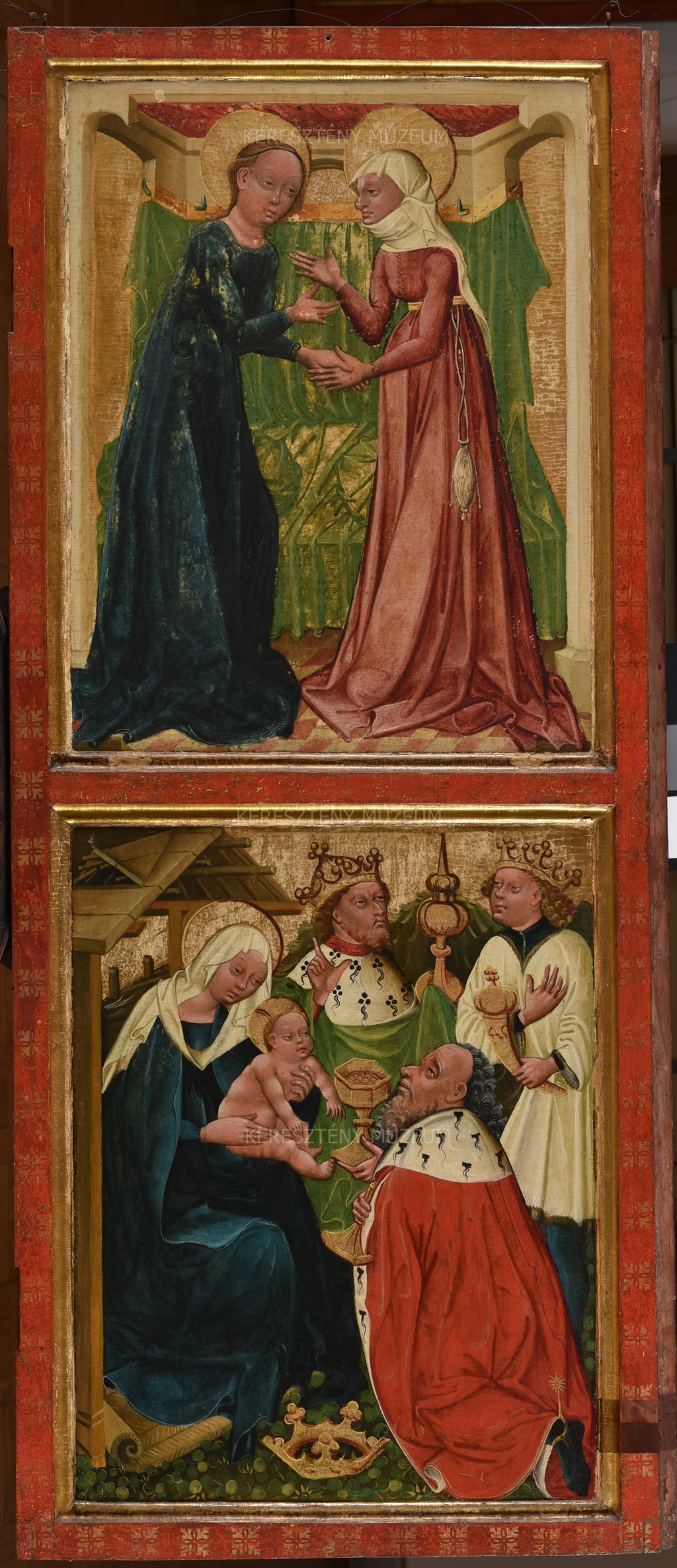
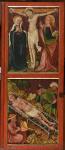
Visitation and Adoration of the Magi; on the reverse: the Crucifixion and the Martyrdom of St. Lawrence; right movable wing.
Inv. 56.494
135 x 57 cm (original frame)
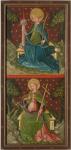
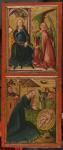
The panel paintings showing scenes from the infancy of Christ on their feast-day sides (56.493 and 56.494) were once the movable wings of a winged altarpiece. It is highly likely they belonged together with the stationary wings showing female saints (55.11, 55.12 and 55.13) and the predella depicting Christ and the twelve apostles. In Blasius Höfel’s collection, these works were all assembled together along with a now lost shrine containing a statue group portraying the Coronation of Mary. The dimensions of the panels match and the styles are identical, suggesting a painting workshop in Vienna or Vienna Neustadt.
According to the auction catalogue for the Höfel collection, another predella containing twenty-three figures and showing the relationship between Mary and Jesus belonged to the retable (ein langes Gemahlde mit 23 Figuren, die Freunschaft Maria’), but its fate is similarly unknown.
Provenance:
The altarpiece wings and the predella all belonged first to Blasius Höfel and were then acquired by Lehmann and finally by Ipolyi. (‘68 and 91. A pair of altarpiece wings, with four paintings on each side: on the recto four scenes from the Life of Mary on a gold ground, and on the verso four images of the Passion on a red ground. 15th-16th c. (Perhaps domestic [Hungarian]’ (Lakatos-Balla 281)
Restoration:
The date of an earlier restoration is unknown. The corrective overpainting and varnish were removed by Péter Menráth in 1970. The earlier touch-ups, especially on Mary’s clothing, the gold surface and the frame were significant. The retouching was done using crosshatching.
Bibliography:
Verzeichniss-1839, 13. sz. - Frimmel-1914, 175-176. – Benesch-1929, 68. – Gerevich-1930, 87. – Genthon-1932, 45. – Pigler-1934, 131-132 (az oltár rekonstrukciója). Genthon-1948 , 126. – Czobor-1955, 13. Alfred Stange: Deutsche Malerei der Gotik XI. München-Berlin 1961. 35. (az Albrecht oltár és a Friedrich oltár mesterének segédje. További művek tőle a frankfurti és a klosterneuburgi múzeumban és bécsi magángyűjteményben). – Boskovits-Mojzer-Mucsi-1964, 155. – Mucsi-1975, 22. – Török Gyöngyi: A Magyar Szent királyok ábrázolása 1447-ben a bécsi Szent István Dóm bécsújhelyi oltárán. In: Miemoriae Tradere. Tanulmányok és írások Török József hatvanadik születésnapjára. (Editor:. Füzes Ádám és Legeza László). Budapest 2006. 575 - 592. – Lakatos-Balla-2012 281.
The panel paintings showing scenes from the infancy of Christ on their feast-day sides (56.493 and 56.494) were once the movable wings of a winged altarpiece. It is highly likely they belonged together with the stationary wings showing female saints (55.11, 55.12 and 55.13) and the predella depicting Christ and the twelve apostles. In Blasius Höfel’s collection, these works were all assembled together along with a now lost shrine containing a statue group portraying the Coronation of Mary. The dimensions of the panels match and the styles are identical, suggesting a painting workshop in Vienna or Vienna Neustadt.
According to the auction catalogue for the Höfel collection, another predella containing twenty-three figures and showing the relationship between Mary and Jesus belonged to the retable (ein langes Gemahlde mit 23 Figuren, die Freunschaft Maria’), but its fate is similarly unknown.
Provenance:
The altarpiece wings and the predella all belonged first to Blasius Höfel and were then acquired by Lehmann and finally by Ipolyi. (‘68 and 91. A pair of altarpiece wings, with four paintings on each side: on the recto four scenes from the Life of Mary on a gold ground, and on the verso four images of the Passion on a red ground. 15th-16th c. (Perhaps domestic [Hungarian]’ (Lakatos-Balla 281)
Restoration:
The date of an earlier restoration is unknown. The corrective overpainting and varnish were removed by Péter Menráth in 1970. The earlier touch-ups, especially on Mary’s clothing, the gold surface and the frame were significant. The retouching was done using crosshatching.
Bibliography:
Verzeichniss-1839, 13. sz. - Frimmel-1914, 175-176. – Benesch-1929, 68. – Gerevich-1930, 87. – Genthon-1932, 45. – Pigler-1934, 131-132 (az oltár rekonstrukciója). Genthon-1948 , 126. – Czobor-1955, 13. Alfred Stange: Deutsche Malerei der Gotik XI. München-Berlin 1961. 35. (az Albrecht oltár és a Friedrich oltár mesterének segédje. További művek tőle a frankfurti és a klosterneuburgi múzeumban és bécsi magángyűjteményben). – Boskovits-Mojzer-Mucsi-1964, 155. – Mucsi-1975, 22. – Török Gyöngyi: A Magyar Szent királyok ábrázolása 1447-ben a bécsi Szent István Dóm bécsújhelyi oltárán. In: Miemoriae Tradere. Tanulmányok és írások Török József hatvanadik születésnapjára. (Editor:. Füzes Ádám és Legeza László). Budapest 2006. 575 - 592. – Lakatos-Balla-2012 281.